TL;DR: Dunnage is the protective material used to secure cargo during shipping. Custom dunnage, engineered from materials like XLPE foam or HDPE plastic, reduces transit damage, supports warehouse automation, and offers a significant ROI over single-use packaging.
When you ship high-value, oddly shaped, or sensitive parts, you don’t just need a container — you need something that protects what’s inside.
That’s where dunnage comes in.

What Is Dunnage?
Dunnage refers to the internal support structure or protective material placed inside a container to secure your product during shipping or handling.
Think of it like the custom padding inside a camera case — but for engine parts, medical devices, electronics, and everything in between.
At Solo Products, we design and fabricate custom dunnage solutions that are engineered to fit your exact parts, processes, and workflow.
What Is Custom Dunnage Made Of?
We use a range of materials depending on your use case, environment, and part complexity. Choosing the right material depends on your part’s weight, surface sensitivity, and the environment of your supply chain.
- Die-Cut Foam Runners – Precision-cut to cradle fragile parts
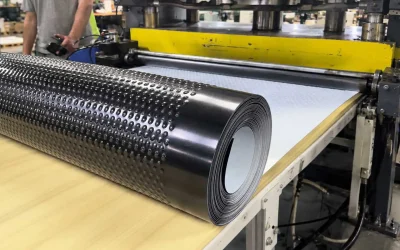
- CNC-Machined Plastic Panels – Durable, reusable, automation-friendly
- High-Durometer Inserts – Great for weight-bearing parts and assembly-line integration
- Anti-Static or ESD-Safe Materials – For electronics and sensitive components
- Interior Kitting Systems – Hold multiple SKUs or steps of an assembly in place
Every dunnage system we build is designed to improve part protection, packing speed, and repeatability across your operation.
Technical Comparison of Custom Dunnage Materials
Choosing the right material depends on your part’s weight, surface sensitivity, and the environment of your supply chain.
| Material Type | Core Advantage | Best For… | Surface Protection |
| XLPE Foam | Ultra-durable & clean | Automotive Class A surfaces, Aerospace parts | Excellent (Non-abrasive) |
| Standard PE Foam | High shock absorption | General cushioning, Heavy components | Good |
| CNC Plastic (HDPE) | Rigidity & Longevity | Reusable loops, Robotic automation | Moderate (Can be lined) |
| Coroplast (PP) | Lightweight fluting | High-density kitting, Lightweight dividers | Moderate |
| ESD-Safe Foam | Static dissipation | Circuit boards (PCBs), Medical sensors | Excellent (Antistatic) |
| Fabric / Textile | “Soft-touch” cradle | Large painted panels, Headlamps | Best (Zero-scratch) |
-
For Long-Term Reusability: If your dunnage needs to last 5+ years in a closed-loop system, CNC-machined HDPE is the industry standard.
- For Sensitive Electronics: Materials with a surface resistance of 106 to 109 Ω are required to prevent electrostatic discharge (ESD).

Why Custom Dunnage Makes a Big Difference
- Reduces transit damage and product loss
- Speeds up packing and unloading with exact-fit inserts
- Enables reusable container programs
- Compatible with automation and robotics workflows
- Lowers costs over time compared to single-use foam or cardboard
Custom dunnage turns a simple bulk container into a precise, repeatable transport system — engineered for lean manufacturing, fulfillment centers, or kitting lines.
The Sustainability & ROI Factor
In 2025, moving to reusable dunnage isn’t just an environmental choice—it’s a financial one. Case studies in the automotive sector show that switching from single-use cardboard to custom plastic dunnage can have a payback period of under 18 months.
By eliminating the recurring cost of expendable materials and the labor required for assembly and disposal, companies often see a reduction in total packaging spend of 20% or more over the life of a product program.
Who Uses Custom Dunnage?
We serve companies across:
- Automotive – For transmission housings, brake components, panels, Class A parts
- Aerospace – For turbine blades, machined parts, avionics
- Medical – For sterilized kits, medical devices, or fragile instruments
- General Manufacturing – For high-mix/low-volume part handling
- Electronics & Automation – For ESD-sensitive components
- Supply Chain Distribution – for kitting, Planograms, SKU counts, and inventory
If you ship parts that can scratch, shift, dent, or break — you need dunnage.


Build It Into Your Workflow
At Solo, we don’t just stock containers — we help you engineer complete packaging systems.
Need a collapsible bin with interior foam? A steel pallet container with removable inserts?
We do that.
Frequently Asked Questions About Custom Dunnage
What is the main difference between dunnage and void fill?
While void fill (like packing peanuts or air pillows) is used to fill empty space and provide general cushioning, custom dunnage is engineered specifically for a product’s geometry. Dunnage supports, secures, and organizes parts, making it essential for high-value items, oddly shaped components, and automated assembly lines.
Is custom dunnage reusable?
Yes. Unlike single-use cardboard or bubble wrap, custom dunnage is typically designed for “closed-loop” shipping systems. Materials like CNC-machined HDPE, XLPE foam, and corrugated plastic are built to withstand hundreds of transit cycles, significantly reducing long-term packaging costs and environmental waste.
How do I choose the right dunnage material for automotive parts?
- For painted/Class A surfaces: Use XLPE (Cross-linked Polyethylene) or fabric-lined inserts to prevent scratching.
- For heavy engine/transmission parts: Use High-Durometer HDPE or Urethane for superior load-bearing strength.
- For electronics: Use ESD-safe (Electrostatic Dissipative) materials to prevent static discharge.
Can custom dunnage help with warehouse automation?
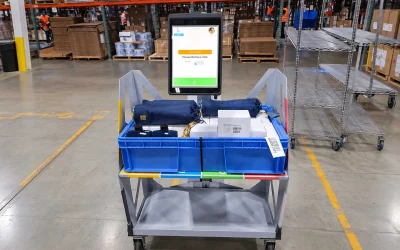
Absolutely. Custom dunnage is a cornerstone of modern automated material handling. Because custom inserts hold parts in a precise, repeatable position (known as “fixed-positioning”), robotic arms can easily “pick and place” components without the need for advanced vision sensors to find shifted parts.
What information is needed for a custom dunnage quote?
- CAD files or physical dimensions of the part.
- The weight and surface sensitivity of the item.
- The container type (e.g., handheld tote, bulk bin, or pallet).
- The estimated cycle life (how many times the dunnage will be reused).